KLOW peptide puts four study compounds in one vial
Each compound has been studied alone. The full blend hasn’t, so you’ll see the useful findings and the catch side by side.
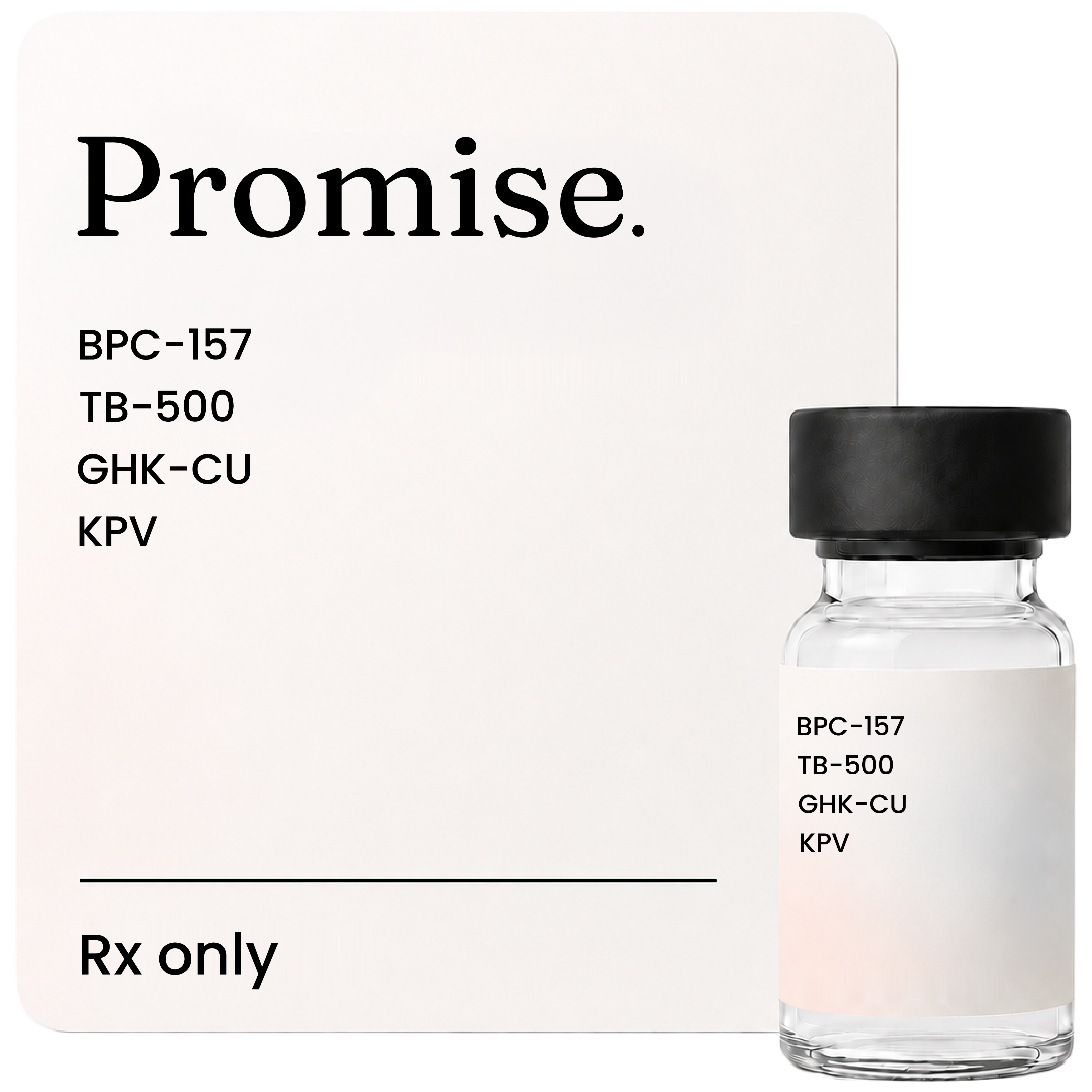
Promise Peptides prescribes KLOW today, with prescription-only care at mypromise.com.
Its four-part product contains KPV, GHK-Cu, BPC-157 and TB-500.
Each case is read by a U.S.-licensed clinician, who can turn a request down. Only U.S. patients are served, and the state and treatment shape the options. This compounded medicine carries no FDA approval.

KLOW peptide was made from four separately studied compounds
The first KLOW sellers put four peptides in one vial. They wanted one mix to help hurt tissue mend.
The parts are KPV, GHK-Cu, BPC-157, and TB-500. Each had been studied by itself.
Here’s the catch. Nobody then tested the whole mix.
People write about sore knees, shoulders, tendons, and ligaments. Some say their pain or swelling eased.
That matters. These posts tell you what users say happened, but no one compared them with an untreated group or checked their health, other care, vial contents, dose, and claims in a trial.
The KLOW effects page also covers complaints and no change. Most papers used mice, rats, or loose cells, though a few used people.
KLOW isn’t FDA-approved. The four parts haven’t been shown to heal tissue together for you.
That’s the bottom line. Separate studies leave your vial’s effect unknown.
Your pain may change with time, rest, or other care. A sales claim can’t sort out those causes for you.
The KLOW peptide composition is four compounds that stay separate
A common KLOW peptide vial holds 80 mg. The label lists 50 mg of GHK-Cu, 10 mg of BPC-157, 10 mg of TB-500, and 10 mg of KPV.
The four parts dissolve side by side. They don’t turn into one new medicine.
KPV was tested in swollen guts. KPV is a tiny piece from the end of a hormone.
Gut cells have small doorways for pieces of food protein. Those doorways can also pull KPV into a sore gut lining [3].
That finding may explain how KPV reached hurt cells. It doesn’t show that KPV helped any patient.
GHK-Cu carries copper. In 1973, this copper-bearing part was found in human blood.
In skin cells kept in dishes, GHK-Cu turned up instructions that tell a cell to build collagen [5]. Collagen is the sturdy support protein in skin.
Other instructions that help cells guard and repair damaged DNA also became more active [4]. Those lab signs don’t tell you whether your skin would look better or feel stronger.
BPC-157 has mostly been tried in rats. A lab makes BPC-157 from linked protein pieces.
A study cut rat Achilles tendons all the way through. Treated rats grew stronger tendon tissue and used the hurt leg better [2].
The paper linked the BPC-157 result to more blood reaching the wound. That rat result can’t predict repair in your own tendon.
TB-500 is cut from a protein the body makes. That longer protein is thymosin beta-4.
Thymosin beta-4 stirred starter cells beside hair roots in rats and mice. Their hair grew faster [11].
TB-500 carries only a short section of thymosin beta-4. The hair papers mainly tested the longer form; they didn’t test the lab product.
The sales pitch assigns one task to each part: less swelling from KPV, more collagen from GHK-Cu, and better blood flow or wound repair from the other two. That list sounds tidy.
It still hasn’t faced one fair test. You can’t tell whether the parts help, hinder, or do nothing to one another.
Animal studies found hair growth after the whole protein [10][11]. A separate mouse test found more activity around hair roots after copper cream [12].
The klow results page sorts those findings by compound. Your knee, skin, and hair weren’t tested in those animals.

KLOW peptide hair findings come from two separate parts
Only two KLOW parts have been studied near hair roots. The other two have no direct hair test.
TB-500 comes from thymosin beta-4. The hair studies used whole thymosin beta-4, not the short product.
Small amounts of thymosin beta-4 sped hair growth in rats and mice. The work used 2 kinds of animal, not people [11].
Starter cells beside each root moved and began new work. Those cells also made more of an enzyme that clears tissue from their path.
That cleared path may help repair cells reach the root. It still doesn’t prove that your hair would grow.
A 2004 study found that thymosin beta-4 aided three things in rodents. New blood vessels, wound healing, and hair-root growth all increased [10].
A 2015 test also found faster mouse hair growth [8]. Again, no person took part.
A 2021 review said thymosin beta-4 may act during hair growth and rest [9]. The review didn’t show that the short product grows human hair.
A 2024 paper found that thymosin beta-4 switched on body chemicals that help end swelling after harm [14]. That paper didn’t test hair.
GHK-Cu has a different mouse finding. In 1991, copper cream made cells around mouse hair roots more active [12].
That old test doesn’t show that human hair would grow. New cell papers haven’t filled that gap.
Blood GHK falls with age. At age 20, a review gives about 200 nanograms in each milliliter of blood; at age 60, it gives about 80 nanograms per milliliter [4].
A nanogram is one billionth of a gram. Even so, those blood figures don’t show that added GHK-Cu brings hair back.
BPC-157 has no hair-root test. That compound helped blood reach rat wounds, and growing hair also needs blood.
KPV has no hair test either. Less swelling inside cells is still far from visible new hair.
No hair study mixed GHK-Cu with thymosin beta-4. None gave KPV or BPC-157 for hair.
The whole KLOW blend hasn’t been given to any animal or person in these studies. You have a lead from separate parts, not a forecast for your hair.
KLOW peptide benefits haven’t been proved for the blend
KLOW peptide benefit claims borrow from separate studies. The finished mixture wasn’t used in any of them.
The clearest wound numbers came from thymosin beta-4 in rats. By day four, new skin covered 42% more of each wound; by day seven, it covered 61% more than salt water did [1].
The rat wounds also made more collagen, the firm support protein in skin. Small blood vessels appeared sooner.
Loose skin cells in a dish traveled between twice and three times their usual distance after 10 picograms. A picogram is one trillionth of a gram, and a dish result isn’t a result in your body.
A different study cut each rat’s Achilles tendon. From 10 micrograms down to 10 picograms, BPC-157 led to stronger tendons than no treatment [2].
The tendon work showed 2 plain gains: stronger tissue and better use of the hurt leg. BPC-157 also made loose tendon cells spread, but that didn’t show a healed tendon in a person.
One human skin test used a placebo, meaning plain cream with no active treatment. Lab measures showed extra collagen in 70% of women using GHK-Cu [4].
The same test found more collagen in 50% using vitamin C and 40% using retinoic acid, a skin medicine made from vitamin A. The paper didn’t say how much collagen rose or whether the women saw a change.
A review found that GHK-Cu turned up cell instructions for collagen, cell defense, and DNA repair [5]. That shows activity in cells, not firmer skin you could see.
KPV was tested in gut cells and sick mice. It lowered interleukin-6, an immune alarm that helps cause swelling [3].
Mice drinking KPV had less harm in the gut lining. Their result doesn’t tell you what KLOW would do.
The KLOW effects page separates personal posts from study findings. You can’t use one rat or cell result to predict your tendon, skin, gut, or hair.